Bitcoin at $99,000 leaves everyone feeling down, while Ethereum at $3,200 has retail investors ecstatic. This shows most retail traders don’t hold Bitcoin, and Ethereum’s price is still too heavy—it hasn’t shaken off the majority of investors yet.
ETH has been sluggish for a long time, but we still need to give everyone a little psychological boost.
One perspective on ETH’s prolonged slump suggests we’re currently in a phase of institutional shift, where major Wall Street financial institutions are emerging as new market makers, gradually taking over tokens previously held by speculative players.
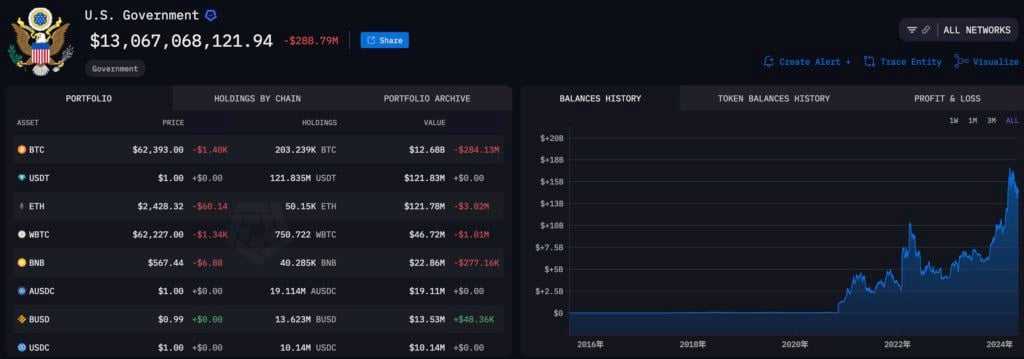
Data supports this observation: over the past year, the market share held by the top 100 addresses has shown an upward trend, now reaching 66%. This increase became particularly pronounced following the approval of ETH ETFs.
This indicates that ETH’s concentration is actually increasing. Top addresses have been consistently buying, yet ETH’s price hasn’t risen. What does this signify?
On one hand, it shows that the major players have remained present and are continuously accumulating holdings. On the other hand, it reveals substantial turnover within the market—not only are retail investors shedding their holdings, but these top addresses are also engaging in internal transfers, essentially facilitating a change in control.
![图片[2]-Why can’t Ethereum break out? Because ETH is currently undergoing a change in market leadership.-OzABC](https://www.ozabc.com/wp-content/uploads/Gc3sEEwaAAIXtbj.jpeg)
It’s important to note that ETH and BTC are the only two tokens with ETFs. Moreover, ETH holds a significant advantage over BTC: staking rewards.
Once ETFs enable staking rewards—or even re-staking—the prospect of at least 3% annual risk-free returns in coin terms becomes highly attractive, especially when compared to traditional financial products.
This represents ETH’s untapped potential and its most significant upside catalyst.
Naturally, traditional financial institutions won’t pass up this opportunity, possessing strong motivation to become ETH’s new market makers.
However, ETH has already been the primary narrative through two bull-bear cycles, resulting in numerous long-term holders and a highly fragmented market. This requires an extended period for token turnover and thorough market consolidation.
Therefore, suppressing ETH’s price over the long term is necessary to force previous long-term holders to shed their holdings—perhaps switching to hot assets like SOL—allowing the new market makers to consolidate control.
Only after the new players have sufficiently accumulated their positions will they have the incentive to drive up ETH’s price.
This is a well-executed strategy.
Thus, do not abandon your truly valuable holdings—BTC and ETH—and endure this prolonged, painful shakeout to secure the long-term gains you truly seek.
Who are the new market makers? When will the shakeout conclude?
Bitcoin at $99,000 leaves everyone unsatisfied, while Ethereum at $3,200 sends retail investors into a frenzy. This reveals most retail investors lack Bitcoin holdings—the Ethereum train remains too heavy, failing to shake off the majority of passengers.
After all this hype and self-delusion, if ETH truly fails to rally this round and becomes the new “EOS,” I’ll say this: If Vitalik doesn’t apologize, I’ll punch him every time I see him.
The “ETH market maker shift theory” has sparked intense debate among both staunch ETH supporters and fierce opponents. Here are some additional thoughts:
1. Who exactly are these new players?
During this shakeout, the industry’s old guard (the original ICO crowd) has been replaced by institutional players from Wall Street. National-level players may emerge next.
But TVBee offers a fresh perspective: The shift from PoW to PoS inevitably requires a change in market control. Mining pools no longer have a sustainable profit model, so they’ve lost interest in pumping the price. New mining pools may enter the market, but lacking sufficient holdings, they cannot drive the price up either. Yet, during the downturn, ETH hasn’t fallen excessively because new market makers are buying at lower levels.
In other words, after Ethereum’s transition to PoS, the shift primarily involves replacing the old PoW miner market makers with new PoS miner market makers.
However, Ethereum successfully upgraded in September 2022, followed by over a year of bear market conditions. Why didn’t a full market transition occur during this bear phase?
ETH instead languished in 2024, with the ETH/BTC exchange rate declining steadily after the ETF approval. This suggests the shift may not be from PoW to PoW players, but rather from ICO veterans to Wall Street institutions.
2. Is the Ethereum ownership transition narrative merely self-serving?
Numerous market signals have emerged: the earlier ETF approval, current staking expectations, and increased holdings by top addresses—all objective bullish indicators.
Fundamentally, ETH remains unchanged as a hub for innovation. With ETF backing—which holds untapped staking potential—and top addresses accumulating, why would anyone surrender their positions now?
3. While its advantages are numerous, we must also acknowledge Ethereum’s challenges:
Compared to Bitcoin, Ethereum lacks sufficient recognition among non-crypto circles. It may only gain attention when traditional institutions fully allocate to Bitcoin and seek new opportunities.
Compared to other Layer 1 blockchains, especially Solana, ETH’s primary issue is overemphasizing infrastructure while neglecting application layer development.
The trend of moving away from consumer-facing applications (de-C-ification) has increasingly distanced Ethereum’s narrative from the actual needs of ordinary users. Naturally, why would average users hold ETH? The ETH ecosystem needs a killer application.
Among these, addressing liquidity fragmentation through L2 interoperability is crucial. Ethereum’s approach of leading a group of L2 “underlings” into collective battles suffers from the core problem that these L2s are loosely integrated. This not only results in poor user experience but also fragments liquidity.
Therefore, L2 interoperability is particularly vital. Solutions are indeed emerging, such as chain abstraction.
4. Carving Sol to Seek the Sword
Comparable to Solana, Sol’s leadership transition phase occurred after the FTX incident. However, ETH currently lacks a major bearish catalyst to shake out many holders, leaving only the option to…
感谢您的支持