![图片[1]-Interview with BTC evangelist Ajelex: Starlink will drive large-scale adoption; Bitcoin is reversing financial power.-OzABC](https://www.ozabc.com/wp-content/uploads/ajelex-1140x570-1.jpg)
This September, BlockTempo was honored to invite Bitcoin promotion leaders from Plan ₿ Network and Lugano to gather at TempoHouse, a crypto community in Taipei. They shared their valuable experience in global Bitcoin education and promotion and innovative applications, and engaged in dialogue with the Bitcoin community and developers in Taiwan to discuss the future of Bitcoin!
Before engaging with the Bitcoin community, Dongqu interviewed Ajelex, Global Head of Expansion at Plan ₿ Network . Ajelex first introduced Plan ₿ Network, which is dedicated to promoting Bitcoin education globally, particularly in Switzerland and El Salvador, where it collaborates with local communities. He believes that the success of Bitcoin promotion should be measured by user needs and engagement, and that education needs to be tailored to different audiences in different regions.
![图片[2]-Interview with BTC evangelist Ajelex: Starlink will drive large-scale adoption; Bitcoin is reversing financial power.-OzABC](https://www.ozabc.com/wp-content/uploads/DSC06193-1-scaled-1.jpg "DSC06193 1 | 动区动趋-最具影响力的区块链新闻媒体")
Ajelex interacts with the Bitcoin community in Taipei | Source: Tempohouse
Plan ₿ Network: Introduction and Objectives
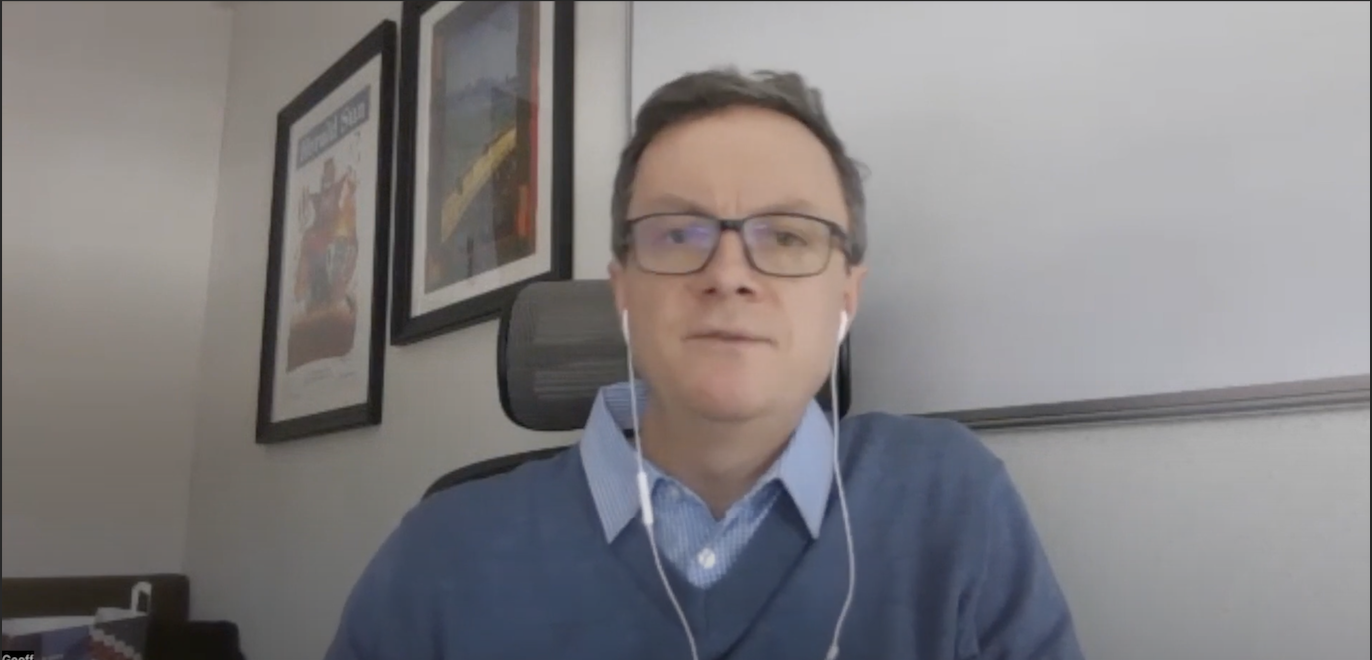
Interviewer : Hello everyone, I’m Arthur from Blocktempo. Today, I’m honored to have Ajelex, a key promoter of Bitcoin, with us. Before we begin our interview, Ajelex, could you please introduce yourself and what your background is?
Ajelex: Of course, my name is Ajelex. I work at Plan ₿ Networks, where I’m responsible for global expansion, which is why I’m in Taipei, Taiwan today.
Plan ₿ Network is an educational initiative that aims to promote Bitcoin education globally, enabling more people to fully understand Bitcoin, become Bitcoin professionals, or at least use it knowledgeably in their daily lives, whether as a store of value or a medium of exchange.
How to address global regulatory challenges in promoting Bitcoin
Interactive Zone : As Bitcoin grows, governments around the world are starting to pay attention to it. So, how do you deal with regulatory uncertainty and changes in crypto policies in various countries when promoting global Bitcoin education and expansion?
Ajelex: Our Plan ₿ Network is located in two relatively stable regulatory jurisdictions, Lugano, Switzerland, and El Salvador, where regulatory uncertainty is relatively low. For global expansion, we rely on a network of partners, such as the Bitcoin community in Taipei. We believe local communities are best positioned to understand local regulatory frameworks, so we primarily support these communities, helping them promote and improve Bitcoin education.
So we’re looking for the Bitcoin community, which is why there’s this kind of screening process. We travel around the world to see if the places we want to connect with share the same values as the Plan ₿ network, because the world is big and there are some bad apples, which is why it’s a tough job.
Because we must proactively reach out to the founders, try to understand them, and see if our values align. If they do, they can become nodes in the Plan ₿ network, and in that case, we will help them with their work as much as possible.
Starlink could be key to the large-scale application of Bitcoin.
Interviewer : I’m curious how you overcome the technical hurdles in regions with limited internet signal or financial infrastructure, where the demand for Bitcoin might actually be higher?
Ajelex: I think the internet isn’t as big a problem as people think, because many developing countries had internet before they had other infrastructure (water or electricity). However, even if the internet requires electricity, you can go to many places, such as remote areas in Africa, where people use mobile phones but don’t have electricity at home, so they might go to specific places to charge them.
Therefore, I believe the network will become less of a problem because Bitcoin is not yet ready for mass adoption. Once it is ready for mass adoption, the network will no longer be an issue.
I’ve been talking about this for a long time: companies like Starlink, which distribute networks almost evenly around the globe without needing ground infrastructure, will play a key role in evenly scaling networks. Currently, only one company is doing this: SpaceX.
But I believe that in the coming years we will see more companies trying to compete and offer the same globally expanded services, because there is a huge market to attract people by providing internet access, and many companies will try to compete for that market share, that’s my opinion.
Furthermore, if I may add, I believe this lack of network infrastructure is actually driving innovation. I invite you to look at projects like Machankura, which uses feature phones, like the Nokia 3310, to enable Lightning Payments. So it uses the USSD protocol on those phones to run a custodian node.
This project originated in Africa, so in this context, the lack of a reliable internet actually fueled innovation, enabling someone without internet access to use the simplest technology from 20 years ago, allowing him to use Bitcoin.
Therefore, I believe that the Internet, in general, will not be a real problem, or at least not a problem that Bitcoin will face when it wants to achieve mass adoption.
BTC is the biggest reversal of financial power
Dynamic Zone : El Salvador has spared no effort in promoting Bitcoin, and Bitcoin education has even taken root in lower grades of schools, such as children and even teenagers. However, we are thinking that it is quite difficult for us to change the curriculum in Taiwan’s education system. So, how do you think we can achieve widespread Bitcoin education among the younger generation? What suggestions do you have?
Ajelex: I think the answer is you. You come from here and know how to communicate with the community, so you are the ones promoting or at least talking about Bitcoin and popularizing it in Taiwan, because for me, it would be much more difficult to come here and talk about Bitcoin.
In reality, it depends on local people promoting Bitcoin; Bitcoin adoption doesn’t necessarily depend on national policy. For example, although most cryptocurrencies are banned in Nigeria, it is one of the countries with the widest cryptocurrency usage. The greater the demand, the higher the adoption rate of Bitcoin.
When you look at the adoption of Bitcoin and cryptocurrencies globally, you see a divergence between norms and applications. When we talk about Bitcoin adoption, we’re talking about countries accepting Bitcoin, and I really can’t imagine El Salvador being the next country to follow suit.
For example, countries like Nigeria, Congo, and Argentina understand the value of Bitcoin because they need an “escape route.” These countries, especially the younger generation, may be the first to adopt Bitcoin, while countries with more financial freedom may be the last.
I believe this is the biggest power reversal we will see in the financial world, because ultimately “the last will become the first.”
Interviewer : Have you seen any countries that haven’t faced a financial crisis? They have healthy financial systems, but perhaps they see a future trend and therefore want to use Bitcoin. Are there any examples of countries that are particularly interested in the Bitcoin system?
Ajelex: One example is Argentina. While it’s not entirely related to Bitcoin itself, there’s a huge demand for USDT among the Argentinians because their currency is rapidly depreciating. People are turning to cryptocurrencies like the US dollar to hedge against inflation, which is also driving the use of cryptocurrencies.
When it comes to Bitcoin specifically, you’ll see many African countries actively using it. For example, communities in countries like Congo, Benin, Togo, and Nigeria are developing ways to avoid the traditional financial system, as Bitcoin allows them to process international remittances without paying the 20% fee.
Bitcoin allows them to receive funds directly and convert them into local currency, avoiding exploitation by intermediaries. Although it is still in its early stages, when you talk to these people, you will find that they have a deep understanding of Bitcoin and the changes it can bring.
Measuring the success and challenges of education
Interviewer : In Taiwan, most people view Bitcoin as an investment tool, and most may not realize that its practical applications are limited. How do you measure the success of Bitcoin education and its reach in different regions?
Ajelex: That’s a good question. To me, Bitcoin is designed for anyone, but not for everyone. What I’m saying now is just my personal opinion:
I believe some people are beyond “saving,” and some will never understand Bitcoin; they will stick to their positions until the end. I think Bitcoin is for those who are willing to be “saved.”
For me, the measure of Bitcoin’s success is observing those excluded from the financial system and seeing them actually using Bitcoin. It might not be daily use, but even monthly use or any form of use counts as success.
It’s difficult to have a perfect metric to describe whether Bitcoin is successful. I believe it will eventually succeed, and some people have already experienced success early on, but giving a specific metric involves defining the word “success,” which means different things to different people. Therefore, this is a topic that requires a long discussion and might require a five-hour podcast to explore in depth.
In short, I think this is a complex and multi-layered answer, and we need to take a nuanced approach to measure whether the promotion of Bitcoin has truly been successful.
How to balance the proportion of technology and philosophy in communication
Interviewer : When you teach about Bitcoin, I’m curious. Bitcoin involves many concepts, such as Proof-of-Work (POW) or Satoshi Nakamoto, whom we don’t even know who he is, and there’s a lot of technical content. How do you balance the technical and philosophical aspects of Bitcoin in your teaching?
Ajelex: I think Bitcoin involves many different topics; it’s related to sociology, economics, history, and many other fields. Everyone is attracted to some aspect of Bitcoin.
I believe the best way to discuss Bitcoin with someone is to first understand who you are talking to.
If you’re talking to someone working in the energy system, you should probably discuss Bitcoin mining with them; they might not care about the philosophical aspects. But if you’re talking to an economist, you can delve into the history of money and what problems Bitcoin solves. Perhaps you’re talking to a developer, in which case you can discuss code or proof-of-work.
Bitcoin is a very broad topic, and I don’t think everyone can understand every single detail. Everyone will focus on the parts they find easiest to understand. However, if Bitcoin ultimately succeeds, people won’t need to fully understand it. Just like many things we use daily, you don’t need to know how they work; you only need to know that they solve your problems.
For example, I’m being filmed by a camera right now. I don’t really understand how the camera works, but I know it helps me achieve the effect I want. If everyone had to understand all the technical details, the technology wouldn’t be widespread. So, we’re still in the early stages, and people who are interested in Bitcoin are often those who want to understand how it works.
In the future, when Bitcoin truly comes to work, people will naturally accept it; it will operate seamlessly, and people won’t even need to know how it works.
Dynamic Zone : Thank you very much, Ajelex. I think this is a great ending. Thank you again for sharing the opportunities and challenges of promoting Bitcoin.
Ajelex: Yes, you can follow Plan ₿ Network to learn about Bitcoin. Taking the time to understand Bitcoin is very important because it can change your life. Spend a little time each year learning about Bitcoin, and you’ll thank yourself for that choice in the future.
![图片[3]-Interview with BTC evangelist Ajelex: Starlink will drive large-scale adoption; Bitcoin is reversing financial power.-OzABC](https://www.ozabc.com/wp-content/uploads/DSC06450-2-scaled-1.jpg "DSC06450 2 | 动区动趋-最具影响力的区块链新闻媒体")
感谢您的支持