Cost of Living in Sydney vs Melbourne (2026 Comparison)
Sydney and Melbourne are Australia’s two largest cities, but their cost structures differ.
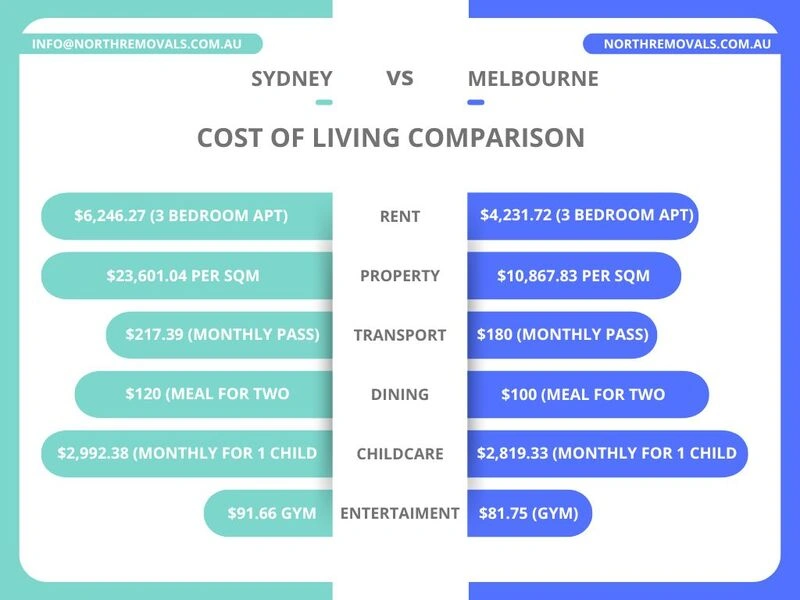
Housing Costs Comparison
Sydney rent (1-bedroom city centre):
≈ $3,200/month
Melbourne:
≈ $2,600/month
Sydney is roughly 20–25% more expensive for housing.
Salary Differences
Average salaries:
- Sydney: $95,000
- Melbourne: $90,000
Higher wages in Sydney partially offset housing costs.
Transport & Lifestyle Expenses
Both cities offer strong public transport networks.
Melbourne is slightly cheaper for dining and entertainment.
Which City Is More Affordable?
For singles:
Melbourne is generally more affordable.
For high earners in finance or tech:
Sydney may offer stronger income growth potential.
But before you start dreaming of holidays and home renovations, consider this: a whopping 64.3 per cent of that income is gobbled up by essential living expenses. The non-negotiables are rent, electricity, gas, internet, food, and public transport.
Rent alone is the biggest culprit, accounting for 43.2 per cent of the average salary. In perspective, that’s much higher than in Germany (27.8 per cent) or the United Kingdom (36 per cent).
Food comes in next, taking up 11.3 per cent of your pay packet. After all the bills are paid, the average Australian is left with $19,124 a year for everything else—from medical bills to the odd flat white.
So, where can you get the most bang for your buck? Here’s the top 10, according to the latest data:
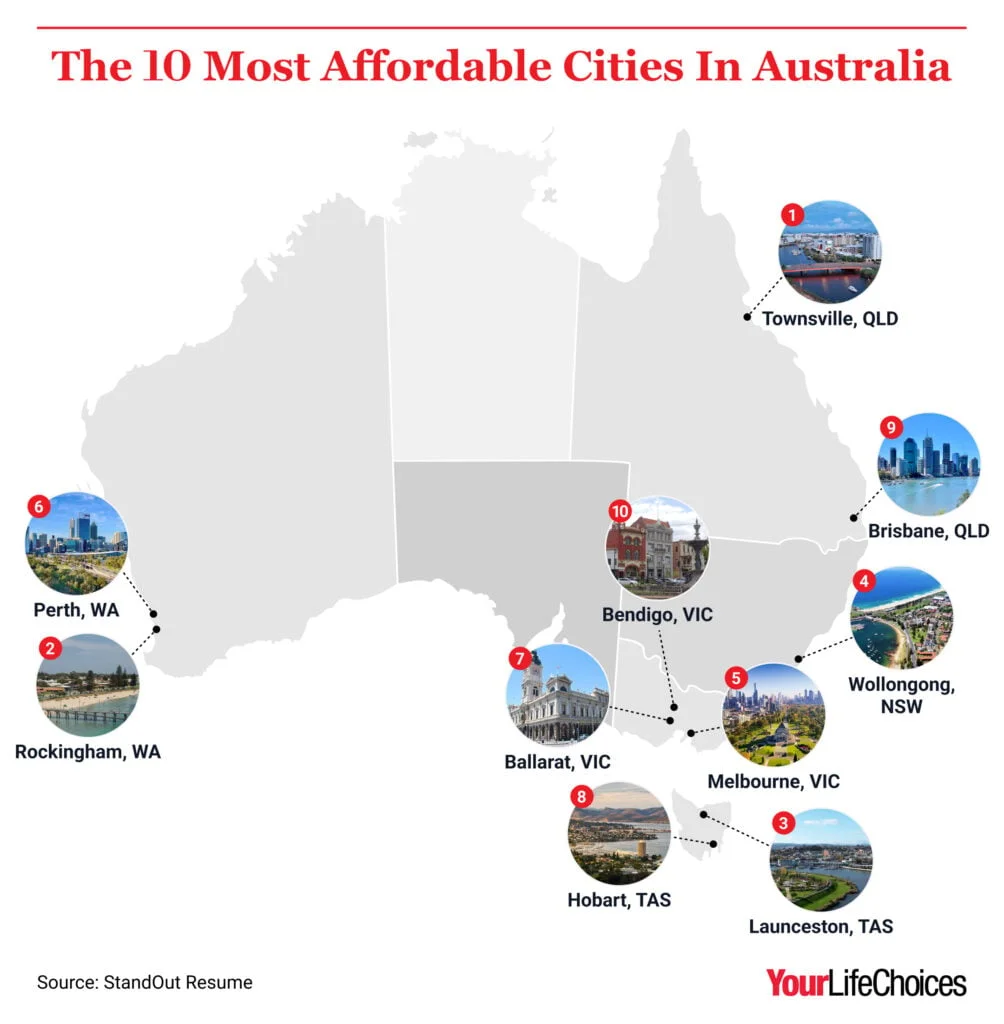
Let’s take a closer look at why these cities made the cut.
Townsville: The surprise winner

Townsville takes the crown as Australia’s most affordable city. With an average after-tax salary of $56,858 and basic living expenses accounting for just 51.7 per cent, locals are left with a healthy $27,442 at the end of the year.
Townsville also boasts the third-cheapest grocery bills ($460 per month), fourth-cheapest gas prices ($766 per year), and fifth-cheapest rent ($364 per week). Not bad for a city with sunshine, beaches, and a laid-back lifestyle.
Rockingham: Western Australia’s hidden gem
Rockingham, just south of Perth, comes in second. Residents here enjoy an even higher average salary ($58,702), but slightly higher living costs mean they’re left with $26,887 after expenses.
Still, with beautiful beaches and a relaxed pace of life, it’s easy to see the appeal.
Launceston: Tasmania’s budget-friendly option

Launceston is Tasmania’s top entry, thanks to the cheapest average rent in the country—just $331 per week—a full 25 per cent below the national average.
Launceston could be your answer if you’re looking for a charming regional city with a thriving food scene and stunning scenery.
Melbourne and Perth: Capital cities that won’t break the bank
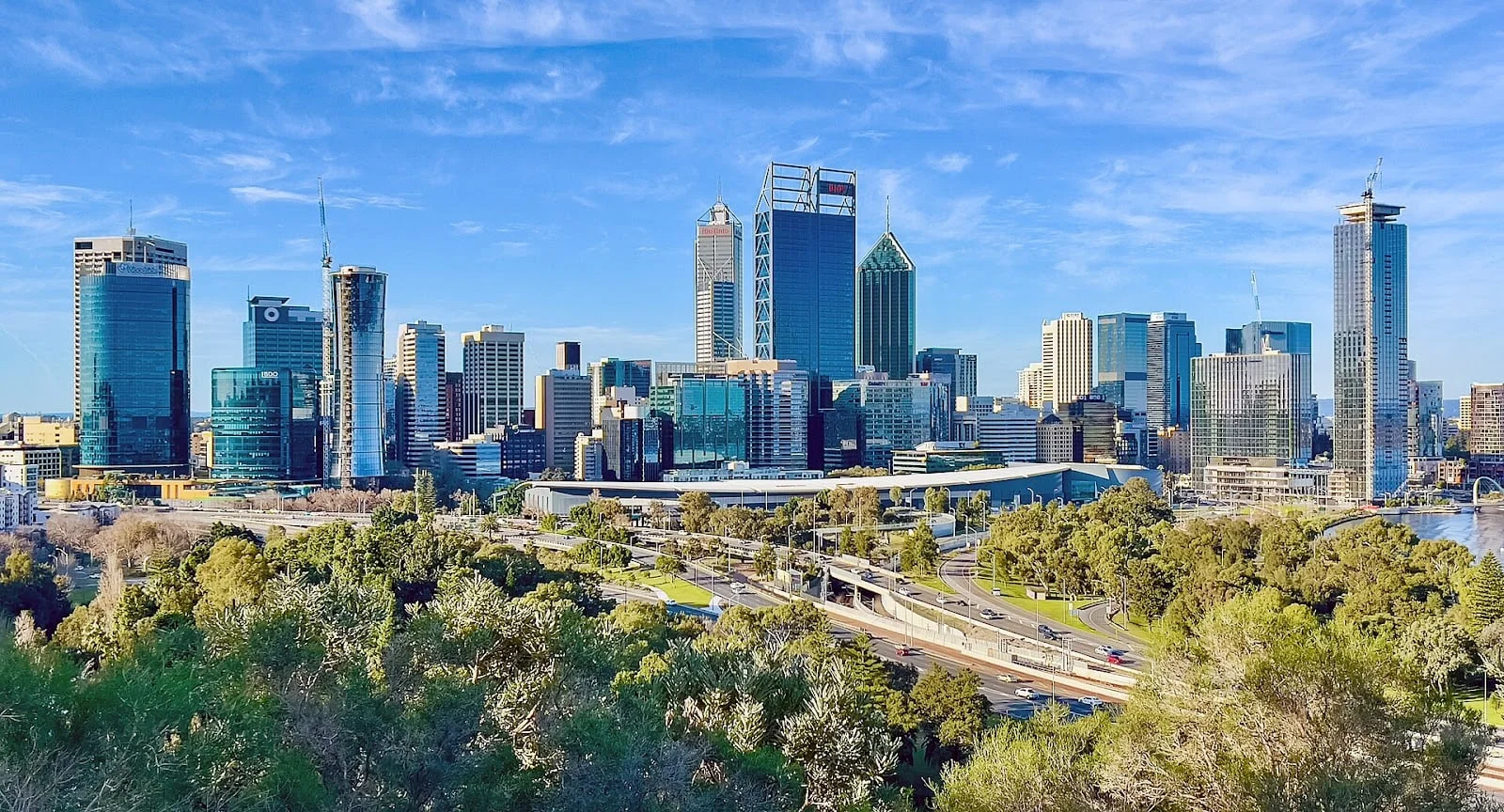
Surprisingly, Melbourne and Perth both make the top 10. Melbourne’s substantial median salary (second only to Sydney) helps offset its higher costs, while Perth’s combination of reasonable wages and living expenses keeps it competitive.
The other contenders
Ballarat, Hobart, Brisbane, and Bendigo round out the list, each offering a unique blend of affordability, lifestyle, and opportunity.
There’s something for everyone, whether you’re after a bustling city or a quieter regional centre.
Where NOT to move if you’re watching your wallet
Conversely, here are some cities that are best avoided if you’re hoping to save:
- Gold Coast
- Canberra
- Geelong
- Cairns
- Darwin
- Adelaide
- Logan City
- Sydney
- Newcastle
- Toowoomba
A staggering 79.1 per cent of the median $48,447 salary goes straight to living expenses, leaving just $10,127 for the year.
Despite its high salaries, Sydney residents still spend 73.3 per cent of their income on essentials, with rent alone taking a massive chunk. Canberra isn’t far behind, with half of residents’ wages going to rent.
Why are costs so high in some cities?

It’s not just about rent. In places like Geelong, high gas prices ($892 per year) and expensive public transport add to the burden.
Lower median salaries in some regional centres also mean less money left over, even if the cost of living is slightly lower.
If you’re considering a move—whether for retirement, a change of pace, or to make your money go further—it pays to do your homework.
Think about what matters most: proximity to family, climate, healthcare, lifestyle, and, of course, your budget.
And remember, while these figures are a great starting point, everyone’s situation differs. If you own your home, have unique medical needs, or want to be close to grandkids, your priorities might shift.
Are you considering moving to one of these affordable cities, or do you have a hidden gem to recommend? We’d love to hear your experiences and tips—share your thoughts in the comments below!
Compare your own income using our
👉 salary calculator
and living expenses via
👉 cost of living calculator